Lewis & Clark Expedition
THE POSSIBLE SHOP
Cap & Ball
Muzzleloaders
Shooting Supplies
Gun Care
Personal Gear
Reloading
Places To Go
Sporting Adventures
Books
Patterns
Camp Gear
Mercantile
Home
Testimonials
Customer Corner

MENU

MUZZLELOADING
KITS

Rifle Kits
 
Pistol Kits
 
Cannon Kits
 
Cap & Ball Kits
 
Classic Arms Kits
 
Gun Finishing Products

MUZZLELOADING
RIFLES

 
Hawken Rifles
 
Kentucky Rifles
 
Tennessee Rifles
 
Pennsylvania Rifles
 
Deerhunter Rifle
 
Gibbs Rifle
 

MUZZLELOADING
PISTOLS

Pedersoli Pistols
 
Traditions Pistols

MUZZLELOADING
SHOTGUNS

Shotguns

MUSKETS

Muskets - Percussion

CANNONS

Cannons

MUZZLELOADER SIGHTS

Sights

MUZZLELOADER BOOKS

Reloading & Gun Care
MUZZLELOADING
RIFLES & PISTOLS
 

MUZZLELOADER HISTORY

History indicates that firearms came into being when the Europeans adopted gunpowder from the Chinese. Cannon like arms were made by boring a hole in a cylinder of metal with a small hole (touch hole) at the closed end. You poured in some gunpowder, placed a projectile on top and  applied fire to the “touch hole” and “BOOM”.  The beginning of the Muzzleloader.
A smoothbore type musket was among the first small arms developed. The Matchlock was the first mechanical ignition device followed by the Wheellock mechanism. Around 1600 / 1625 the Flintlock mechanism appeared and was used by civilians and military for the next 200 plus years.
Firearms were brought to America by the first explorers and traded to the Indians. These early muzzleloader's were to become known as the North West Trade Guns. By the mid-seventeen hundreds, the Indian trade gun was the most traded weapon in North America.


THE LONGRIFLE

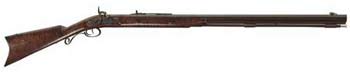
The Pennsylvania rifle, Kentucky rifle, and Tennessee or hog rifle were all variants of the long rifle.

Around 1725 / 1750 in Lancaster, Pennsylvania immigrant craftsmen from Germany designed a light, slender, accurate and graceful longrifle. It was the first truly American made firearm and became to be known as the Kentucky Rifle. This rifle became the primary weapon of the frontiersmen in the wilds of Tennessee and Kentucky. The Kentucky Rifle was considered to be a necessity by frontiersmen, and most frontier families owned one. Rifle shooting was a way of life on the great American frontier.
The Kentucky Rifle was more accurate than any known previous firearm. It had helical grooving in the barrel “rifling”; this creates a rotary motion to the projectile and creates greater range and accuracy. In the hands of a skilled rifleman the Kentucky Rifle was deadly at 200 yards or more.
The Kentucky Rifle was used in the American Revolution as well as the War of 1812. It is said that in the War of 1812,  the long rifle gained its nickname the Kentucky Rifle, after a popular song "The Hunters of Kentucky", about Andrew Jackson and his victory at the Battle of New Orleans.
Daniel Boone also carried a Kentucky Rifle through Cumberland Gap.

HAWKEN RIFLE

In 1815 Jacob Hawken established a gun shop in the village of St. Louis. Jacob’s brother, Samuel, joined him in 1822. The Hawken brothers established a reputation for manufacturing excellent Muzzleloading Rifles. There claim to fame was the "plains rifles". The Plains Rifle was what their customers needed when they ascended the Missouri River in search of Beaver, a quality gun, light enough to carry all the time and capable of knocking down big targets at long range. They called their Rifles "Rocky Mountain Rifles". Rifles Stamped “J&S Hawken St. Louis” were sought after throughout the rapidly expanding frontier among trappers and mountain men. In 1849 Jacob Hawken died and rifles were marked S. Hawken.
A number of famous men were said to have owned Hawken Rifles, including: Jim Bridger, Kit Carson, Joseph Meek and Theodore Roosevelt.

THE MOUNTAIN MEN

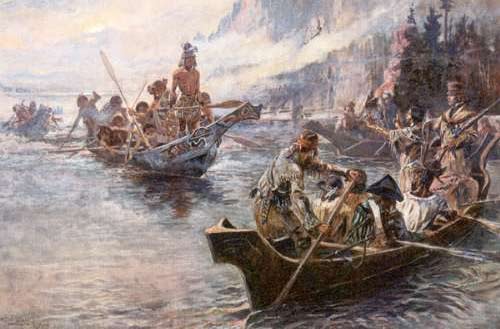
When Lewis & Clark returned from there exploration to the Pacific Ocean, they had glowing accounts of beaver and other fur bearing animals in the great new country they had traversed. French traders had been operating out of St. Louis and other villages up and down the Missouri river for many years, mainly with the Indians on the lower reaches of the river. Manual Lisa was among the first to send expeditions to the Upper Missouri to trade and trap Beaver. The Hudson Bay men from Canada were trapping Beaver with a post in the Oregon country and had expeditions reaching as far south and east as the Mandan villages.

Two men, William H. Ashley and Andrew Henry, had a plan to revolutionize the fur trading industry. They formed the Rocky Mountain Fur Company and in 1822, and posted the following advertisement in the St. Louis papers.

TO ENTERPRISING YOUNG MEN
The Subscriber wishes to engage ONE HUNDRED MEN to ascend the river Missouri to its source, there to be employed for one, two or three years.  For particulars, enquire of Major Andrew Henry, near the Lead Mines, in the County of Washington, (who will ascend with, and command the party) or to the subscriber at St. Louis

Wm H. Ashley
The men who responded to this ad became known as "Ashley's Hundred." These Trappers would be Free Trappers, not one employed by a major fur company.  These Free Trappers could trade or sell their pelts to whoever would give the best price. Ashley’s company, The Rocky Mountain Fur Company, soon implemented the rendezvous system which hauled supplies, in the spring, to specific locations in the mountains where the trappers exchanged furs for goods and money.

MORE TO COME


Home
Contact
Shipping
Links
Back To Shopping Cart